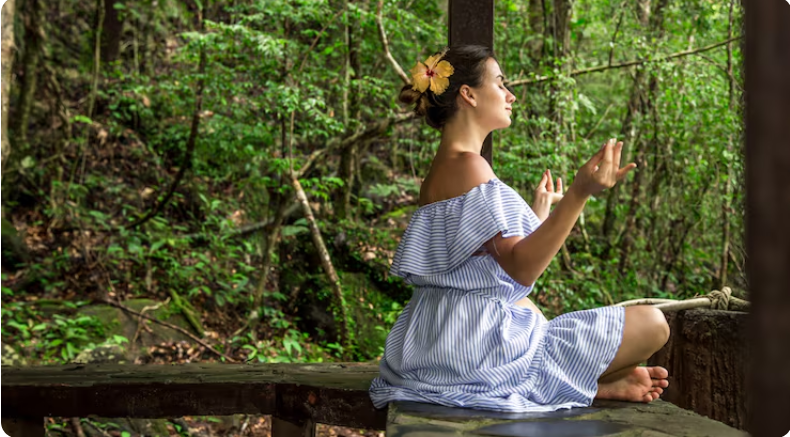
There’s a particular quiet that settles over the Amazon just before dusk. The birds go first, then the insects seem to hold their breath, and for a few minutes the whole forest feels like it’s leaning in to listen. If you’ve come to the Peruvian jungle for an ayahuasca retreat, that’s usually the moment it hits you, the sheer distance between the life you left behind and the one you’ve stepped into. No phone signal. No calendar. Just the river, the trees, and a decision you made weeks ago that suddenly feels very, very real.
People travel from all over the world to sit in that quiet. Peru has become the beating heart of the modern ayahuasca movement, and for good reason. This is where the tradition lives not as a wellness trend imported and repackaged, but as a genuine practice carried down through generations of Amazonian healers. Understanding that difference is the single most important thing you can do before you go.
Why Peru, and Why Now
Ayahuasca isn’t new. Indigenous communities across the Upper Amazon the Shipibo-Conibo, the Asháninka, and others have worked with the brew for centuries, long before it became a subject of Western documentaries and dinner-party curiosity. The plant medicine itself is a combination: the Banisteriopsis caapi vine married with the leaves of Psychotria viridis, brewed slowly over an open fire, sometimes for a full day. On their own, neither plant does much. Together, through a bit of botanical alchemy the region’s healers understood long before science caught up, they produce one of the most profound altered states a human being can experience.
What’s changed in recent years is the world’s willingness to take it seriously. Researchers are studying ayahuasca’s effects on depression, trauma and addiction. Veterans, burnt-out professionals, grieving parents and the merely curious are booking flights to Iquitos and Cusco. The city of Iquitos in particular reachable only by boat or plane, hemmed in by jungle on every side has become a kind of unofficial capital for those seeking the real thing.
But here’s the part the glossy brochures tend to skip: the experience Peru offers is only as good as the people guiding it. And they are not all created equal.
The Difference a Genuine Retreat Makes
I’ve spoken to enough travellers to know how these stories can go sideways. Someone finds a cheap ceremony through a hostel noticeboard, sits with a “shaman” they’ve never met, drinks something they can’t identify, and spends the night terrified in a room full of strangers. It happens. The unregulated corners of the ayahuasca world can be genuinely dangerous, and the medicine deserves far more respect than that.
A proper retreat is a different animal entirely. Places like Planta Maestra Ayahuasca, tucked into the forest near Iquitos, exist precisely because the tradition needs stewards who take it seriously. The name itself planta maestra, “master plant” reflects the Amazonian view that ayahuasca is a teacher, not a drug. That framing changes everything about how the work is done.
At a retreat run this way, nothing is rushed. You don’t simply turn up and drink. There’s screening beforehand, conversations about your health and your intentions, and preparation that often begins days before your first ceremony. The curanderos the healers who lead the ceremonies have usually spent years, sometimes decades, in apprenticeship. They sing icaros, the medicine songs that shape and steer the ceremony, and they know how to hold a room of people through the hardest hours of their lives. That skill isn’t something you can fake, and it isn’t something you find on a noticeboard.
The Dieta: The Part Everyone Underestimates
Long before the first ceremony, serious retreats ask you to follow la dieta the diet. And “diet” is a bit of a misleading word, because it’s less about weight and more about clearing the decks.
For anywhere from a few days to a couple of weeks, you strip things back. No salt, no sugar, no pork, no red meat, no alcohol, no recreational substances. Often no sex, and a good deal less stimulation of every kind. Some retreats extend this to a plant dieta, where you spend time with a single teacher plant in isolation, building a relationship with it before ayahuasca ever enters the picture.
It sounds austere, and it is. But travellers who’ve done it will tell you the dieta is where a surprising amount of the work happens. Stripped of the usual distractions and comforts, you start to notice things habits, anxieties, the constant low hum of a mind that never gets to rest. By the time you sit for ceremony, you’ve already begun the process of turning inward. Skipping the dieta, or choosing a retreat that doesn’t take it seriously, is a bit like showing up to run a marathon having never laced up your shoes.
What a Ceremony Is Actually Like
I won’t pretend to summarise something that resists summary. Every ceremony is different, and every person’s experience is their own. But a few things tend to hold true.
You’ll usually sit at night, in a maloca which is a large, round ceremonial space with a small group and the Curandero leading. The medicine is served in a cup, the candles are blown out, and then you wait. For some people it comes on gently; for others it arrives like a freight train. There can be visions of extraordinary vividness, waves of emotion, moments of profound clarity, and yes, the famously unglamorous physical purge, which the tradition regards as a necessary part of the cleansing.
It can be beautiful. It can also be genuinely difficult. People confront grief they’ve buried for decades, memories they’d rather not revisit, versions of themselves they’ve been avoiding. This is not a recreational high, and anyone selling it as one is misunderstanding it badly. The icaros carry you through, the curandero keeps watch, and by morning exhausted, cracked open, often oddly light most people feel they’ve been somewhere that words can’t quite reach.
Going in With Your Eyes Open
For all the transformation people describe, ayahuasca is not something to approach casually, and any reputable retreat will tell you so. There are real medical contraindications. The brew interacts dangerously with certain antidepressants particularly SSRIs and MAOIs and with a range of other medications, so honest disclosure during screening isn’t a formality, it’s a safeguard. People with certain heart conditions or a personal or family history of psychosis are generally advised to steer well clear. A retreat that doesn’t ask you these questions is one to walk away from.
The best advice is unglamorous but sound: do your homework. Research the Retreat, read what past guests have written, ask about the healers’ lineage and training, and understand exactly what medical screening is in place. A centre that welcomes those questions that wants you healthy, prepared and informed is showing you exactly the kind of care you’re trusting them with. This is precisely the ethos that distinguishes established retreats such as Planta Maestra Ayahuasca from the fly-by-night operators that have followed the money into the jungle.
The Journey Back
Perhaps the most overlooked stage of the whole thing is what happens afterwards. The insights that arrive in ceremony can be dazzling, but they fade fast if you don’t do the work of integration carrying what you’ve learned back into ordinary life, into your relationships, your habits, your work. Good Retreats build this in, with integration circles, conversations with facilitators, and time to sit with what came up before you’re bundled back onto a plane.
Because that’s the real point of it all. The Amazon, the ceremonies, the visions they’re not the destination. They’re the doorway. What matters is the life you go back to, and whether you return to it a little more awake than when you left. People come to Peru chasing a mystical experience, and many find one. But the ones who get the most out of it tend to arrive humble, leave changed, and understand that the medicine only opens the door. Walking through it is up to you.