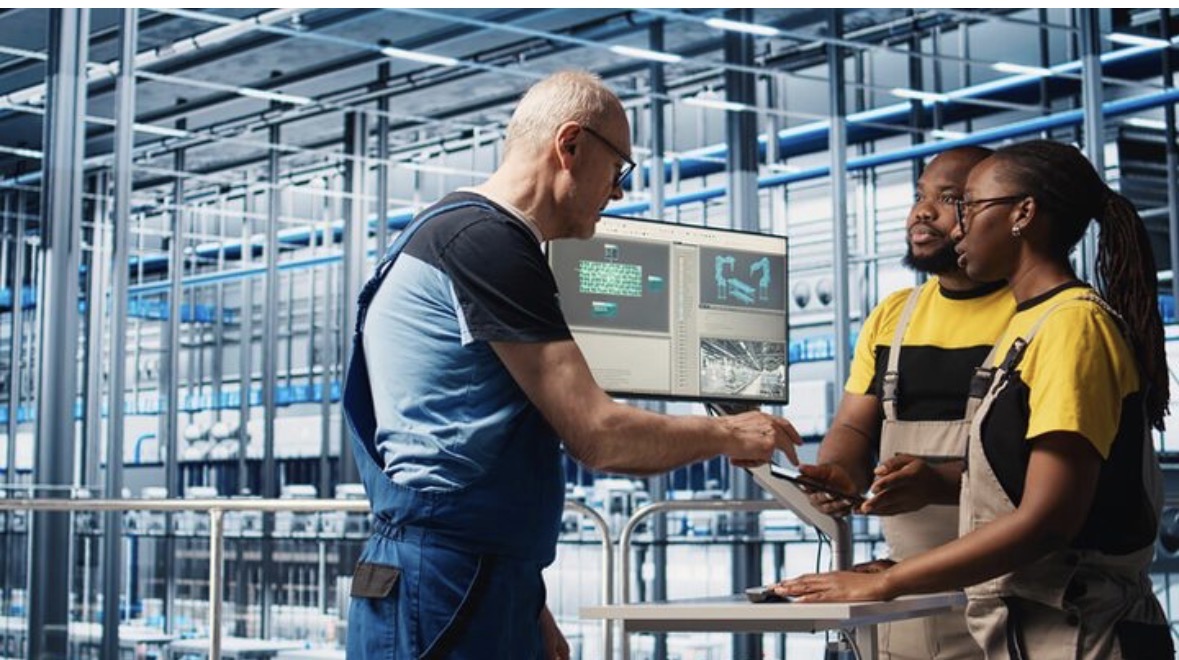
Automation has become one of the most talked-about topics in supply chain and warehousing over the past several years, and the conversation often swings between two extremes. Either it’s presented as the inevitable future that will transform everything, or it gets dismissed as expensive and impractical for all but the largest operations. The reality is more nuanced and more interesting than either of those takes. The right warehouse automation investment, sized appropriately for your operation and integrated thoughtfully with your existing infrastructure, can deliver meaningful gains in throughput, accuracy, and labor efficiency without requiring you to rebuild your facility from the ground up.
The starting point for most operations isn’t full robotic automation. It’s targeted process improvement using technology that’s already proven and relatively accessible. Barcode scanning and WMS integration, conveyor systems for high-volume sortation, pick-to-light or voice-directed picking systems, and automated label printing and application all fall into a category of automation that meaningfully reduces manual effort and error rates without the capital intensity of AGVs or robotic picking arms. These solutions also tend to be faster to implement and easier to train workers on, which matters when your operation can’t afford a lengthy transition period. The Material Handling Institute’s automation fundamentals library is a genuinely useful resource for understanding the range of available automation technologies and how to evaluate which ones are a realistic fit for operations at different scales.
For operations that have moved past the basics and are ready to consider higher-level automation, the options have expanded considerably in recent years. Autonomous mobile robots for inventory transport, goods-to-person systems that bring product to a stationary picker rather than sending workers through the aisles, and automated storage and retrieval systems for dense, high-velocity inventory are all now available at price points that make them viable for mid-sized operations, not just enterprise-scale fulfillment centers. The business case for these investments usually rests on labor cost reduction, throughput capacity, and accuracy improvement working together rather than any single factor justifying the spend on its own.
Integration with your existing racking and layout is one of the most important factors to think through before committing to any automation project. Some systems require specific aisle widths, floor flatness tolerances, or rack configurations to function reliably, and discovering those constraints after you’ve already committed to a system can create expensive retrofit work. The APICS supply chain management certification resources cover operations planning and technology integration in depth, providing a framework for thinking through automation decisions as part of a broader operational strategy rather than as isolated capital purchases.
The most important thing to understand about warehouse automation is that technology alone does not create efficiency. The process behind the technology has to be sound first. Automating a broken process just makes the broken process run faster, and the problems become harder to see because the system is moving too quickly to observe them clearly. The operations that get the most out of automation investments are typically the ones that have already done the foundational work of cleaning up their layouts, tightening their inventory accuracy, and documenting their workflows before they start layering technology on top. That groundwork takes time, but it’s what makes the difference between an automation investment that delivers on its promise and one that creates as many headaches as it solves.